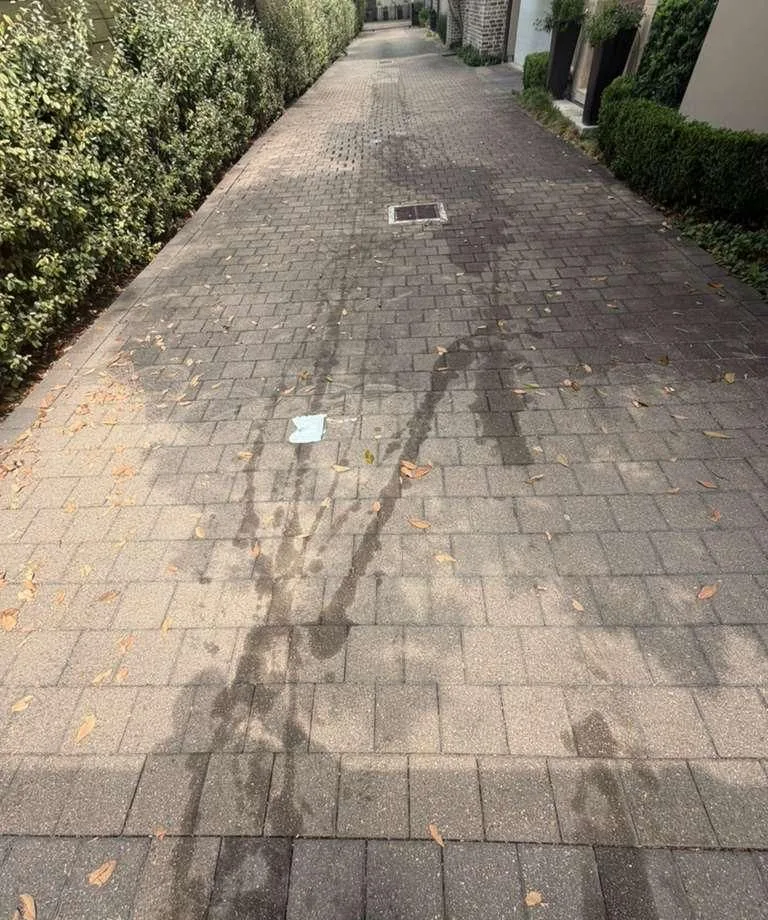
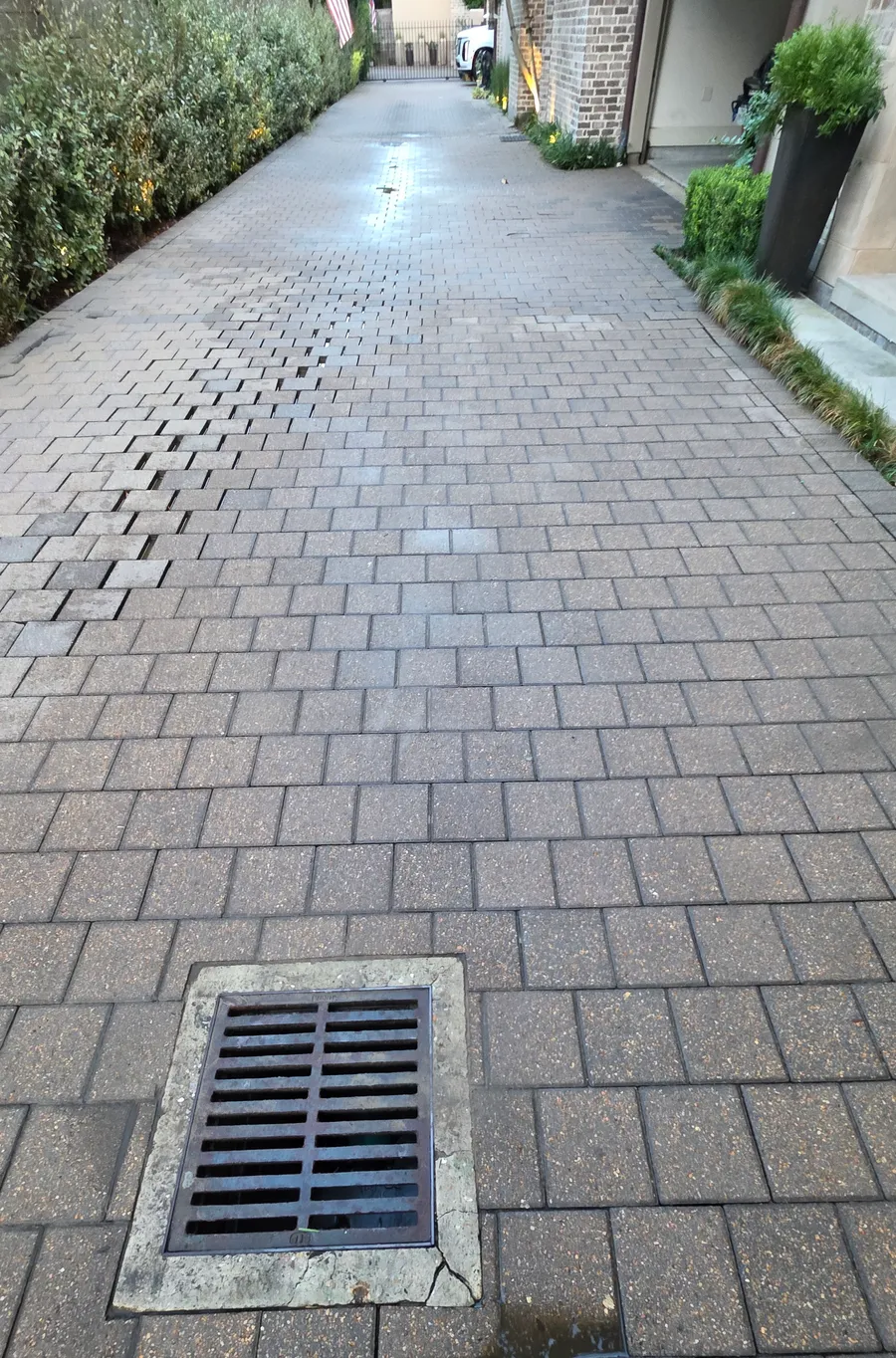
Two stains, two chemistries
A roll-off dumpster and a dump truck leave different stains that are treated differently, and treating them with the same product is why so many of them are still there.
Rust is iron oxide from the container’s rails and wheels, carried onto the concrete by rain and dew. It is a mineral stain bonded to the surface. Water, soap, and pressure do not touch it; a rust remover made for concrete does.
Hydraulic fluid and motor oil are petroleum. They soak into concrete pores and, on pavers, into the paver and the joint sand, so the treatment has to reach the oil below the surface rather than wash the top of it.
Tar and asphalt from a roofing job are a third case, softened with a product made for them and lifted rather than scrubbed in.
Rust rings
A rust ring comes out with a rust remover made for concrete, rinsed so the treated area matches the rest of the driveway. Rust that has soaked into old or porous concrete sometimes takes a second treatment. On broom-finish and stamped concrete this removes most rings completely. On natural stone, meaning limestone, travertine, or marble, the same products etch the surface, so stone is treated with a pH-neutral product after a test patch.
Hydraulic fluid and oil
Fresh fluid is absorbed before any water touches it, since water spreads oil. The stain is then treated with a degreaser matched to the surface, machine-scrubbed, and rinsed with the water recovered. Oil that has soaked into pavers or old concrete is drawn back out, and the joint sand in the worst spots is often replaced rather than cleaned.
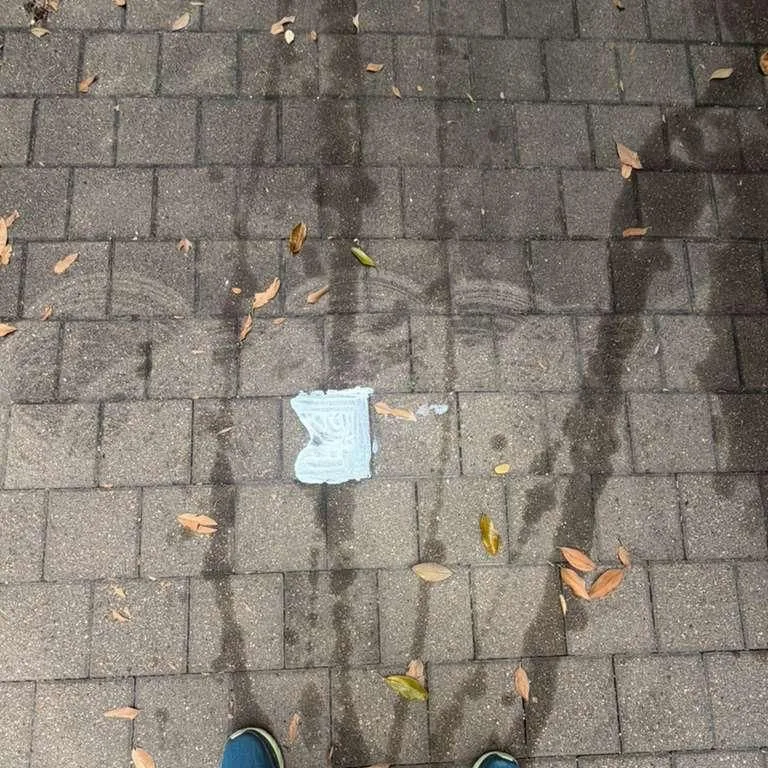
Fresh spills come out. Spills that have baked in the sun for weeks lighten substantially and may take a second round, which is why the phone call should happen the day the truck leaves.
What does not work
- Pressure alone. It removes neither stain, and without recovery it pushes the loosened oil into the joints and the storm drain.
- Muriatic acid. It etches the concrete, changes its color, and does nothing to oil or to rust that has bonded.
- Bleach. It does not remove rust and can discolor colored or stamped concrete.
- Sealing over it. Sealer locks the stain in permanently.
- Hosing it into the street. The water carries oil and cleaner into the storm system, which is an illicit-discharge problem for the property owner and the contractor.
Matching the treated area to the rest
A stain removed correctly can leave a clean spot on a dirty driveway, which the owner sees as a new problem. The fix is to treat the stain and then rinse the whole driveway evenly so the treated area blends, and to say up front whether a full-driveway clean is part of the quote.
Where the water goes
The rinse water from a stain job carries the oil and the cleaner. It is recovered from the driveway and belongs in a sanitary drain, not in the gutter. A contractor who asks the cleanup vendor that question at quote time avoids a complaint from the neighbors and a stormwater problem on a job that is otherwise finished.
For contractors: the driveway make-right
Every roofing job and most remodels put a dumpster on the customer’s driveway for a week and a dump truck or boom truck in front of the house. The rust ring and the drip end up on the punch list. A driveway make-right after the container is pulled, quoted per driveway from a photo and documented with before-and-after pictures, is a line item on the closeout that costs a fraction of a replacement claim.
How Maddox handles it
Maddox provides driveway and jobsite stain removal across Greater Houston for contractors, haulers, property managers, and homeowners. On a paver driveway shared by three homes in Houston, a roll-off truck blew a hydraulic line across the pavers, and two earlier cleanings had not removed it. Maddox treated the fluid, drew out the set-in spots, and rinsed the full driveway so the treated area matched the rest. The driveway was finished in one day and photographed for the owners.